En

Exhibitor rebooking: How trade show organizers secure revenue early

Productivity

How organizers optimize their processes with modern trade show planning software

Hannes Wagner Fairoo

Hannes Wagner

LinkedIn

Anyone who contacts exhibitors only after the trade show has already lost. Why a structured rebooking process is the most important revenue lever for trade show organizers—and how to set it up in 5 steps.

Why rebooking is the underestimated game changer

Most trade show organizers invest the majority of their energy in acquiring new exhibitors. New leads, cold calls, LinkedIn outreach. All important. But in doing so, they often overlook where the real money lies: with the exhibitors who are already there.

Industry data shows that trade shows lose between 25 and 35 percent of their exhibitors annually on average. At many events, the churn rate is even 50 percent. For a mid-sized trade show, this can quickly mean several hundred thousand euros in lost revenue. And yet, exhibitor retention receives significantly less attention than new customer acquisition in most organizations.

The good news: Proactive engagement and a structured rebooking process can increase the rebooking rate by 15 to 20 percent. The key is to get the timing right, make the process as simple as possible, and give exhibitors real reasons to commit immediately.

What exactly is rebooking?

Rebooking describes the process in which existing exhibitors book their booth space for the next edition of a trade show—ideally during or shortly after the current event. The principle is simple: use the enthusiasm and positive experience of the ongoing show to secure a commitment for next year right away.

This can happen in different ways: as self-service via a digital exhibitor portal, directly on-site at the rebooking desk, or through the sales team using a tablet on the floor. What matters is that the process is fast, straightforward, and binding.

A successful rebooking process in 5 steps

Step 1: Start early, not at the trade show

The best rebooking strategies do not begin on the first day of the show, but 8 to 10 weeks earlier. During this phase, you should set your prices for the next edition, prepare the new floor plan (at least in an initial version), and brief your sales team.

Contact your key exhibitors—the so-called anchor exhibitors—personally in advance. Their early commitment gives you momentum and credibility with all other exhibitors. If an industry leader has already booked, the decision becomes much easier for smaller exhibitors.

Step 2: Use the floor plan as a sales tool

Your floor plan is not just a map. It is one of your strongest sales tools. When exhibitors can see in real time which spaces are already taken and which premium positions are still available, natural urgency is created.

Mark entrances, stages, catering areas, and lounges—in other words, the zones with the highest visitor traffic. Clearly show where the coveted spots are. And above all: keep the plan updated live. If an exhibitor sees that their preferred spot is being taken by someone else, it accelerates the decision enormously.

Tools like Fairoo provide a digital floor plan with drag-and-drop functionality that updates in real time and is directly linked to the booking process. This turns a static PDF into an interactive sales tool.

Step 3: Set up on-site rebooking professionally

The trade show itself is the moment when willingness to book is at its highest. Exhibitors are having good conversations, generating leads, feeling the buzz. You need to capitalize on this feeling.

What is needed for this:

A clearly visible rebooking area with friendly, trained staff. Your sales team should also be mobile, using tablets or laptops running the current floor plan. This allows bookings to be completed directly at the exhibitor’s booth, without them having to leave their spot.

What convinces exhibitors:

  • Early-bird discount: By far the strongest lever. A reduced price for booking during the show provides a clear financial incentive.

  • Booth location priority: Those who book early choose first. This is especially relevant because poor booth position is the most frequent complaint from exhibitors.

  • Cooling-off period: Offer a 14-day consideration period. This removes pressure and makes the decision risk-free for exhibitors.

  • Bundled offers: Combine booth space with marketing packages, sponsorship options, or enhanced exhibitor profiles.

Step 4: Enable digital self-service rebooking

Not every exhibitor wants to or can book directly on-site. Maybe the responsible person is not at the trade show, or internal budget approval is still pending. That is why you also need a digital rebooking channel.

A self-service portal through which exhibitors can independently select and book their space for the next edition extends the rebooking window beyond the trade show days. The most important requirements for such a portal:

  • The current floor plan with real-time availability display

  • The option to keep the previous booth or choose a new one

  • Direct contract processing and confirmation

  • Responsive design that also works on smartphones

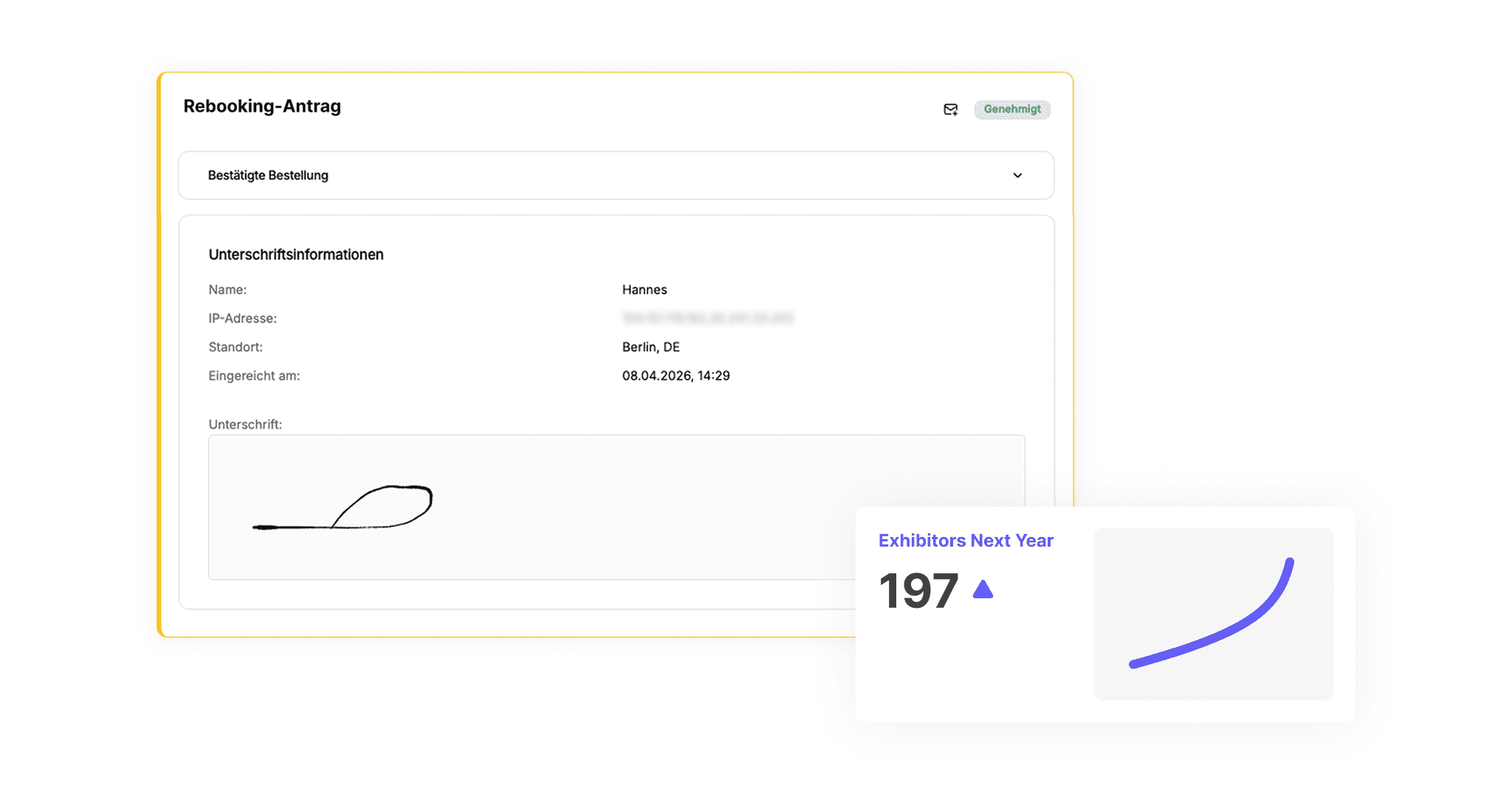
With Fairoo, exactly this kind of rebooking portal can be set up: exhibitors see the interactive floor plan, can choose their preferred booth, and complete the booking digitally. For organizers, this means less manual effort and faster planning certainty.

Step 5: Follow up after the trade show

Rebooking does not end with the last day of the show. The first 48 hours after the event are a critical time window. Exhibitors who have not yet decided are still reachable now, and the trade show experience is still fresh.

What matters now:

Share data: Send your exhibitors key metrics as quickly as possible: visitor numbers, engagement data, lead statistics. Exhibitors often have to justify the ROI of their participation internally. The better the data, the easier it is to argue for booking again.

Follow up personally: For your top exhibitors and sponsors, a short call or personalized message is worthwhile. Ask about their trade show experience, gather feedback, and transition seamlessly into the rebooking conversation.

Identify at-risk exhibitors: Try to find out which exhibitors show signs of churn risk. Indicators can include late payments in the past, low engagement in the exhibitor portal, or reserved feedback. These exhibitors deserve special attention and a personal conversation.

Why a priority system makes sense

Many successful trade shows work with a points system that determines the order of booth selection during rebooking. Points are awarded based on factors such as number of years as an exhibitor, booked square meters, sponsorship engagement, advertising bookings, or association membership status.

The system creates several advantages at once: long-standing exhibitors feel valued and get the best spots. At the same time, it motivates newer exhibitors to increase their engagement because they know loyalty pays off. And for you as an organizer, it creates a transparent, fair process that minimizes disputes over booth allocation.

The most common rebooking mistakes

Starting too late. If you only start thinking about rebooking on the day of the show, you will lack a prepared floor plan, pricing strategy, and trained staff.

Relying only on on-site. Some exhibitors need time. Without a digital channel, you lose these bookings entirely.

Offering no incentives. "Book now or leave it" does not work. Without an early-bird discount, booth selection priority, or other benefits, there is no pressure to act.

Not sharing data. Exhibitors want to know whether their investment paid off. If you provide no numbers, you make it difficult for them to justify the next booking internally.

Making the process complicated. Every additional step, every PDF form, every manual email is a hurdle. The simpler and more digital the process, the higher the conversion.

Rebooking as a strategic advantage

A well-running rebooking process changes the entire dynamic of your trade show planning. Instead of starting from zero every year, you enter the new planning phase with a solid base of booked exhibitors. This gives you planning certainty, more reliable cash flow, and the freedom to focus your sales energy on true new acquisition rather than the laborious win-back of former exhibitors.

At the same time, a successful rebook becomes a self-reinforcing cycle: a well-filled floor plan creates urgency among still undecided exhibitors. The message "75 percent of space is already booked" is the strongest sales trigger there is.

Fairoo is the digital platform for trade show organizers: from booth booking and interactive floor plans to the exhibitor portal. Our rebooking module enables self-service and on-site bookings for the next trade show edition, directly linked to your floor plan in real time. Request a demo now