Digital trade fair planning in 5 steps
Productivity
How organizers automate their processes with modern trade show planning software
Whether it's a career fair, construction and energy fair, or industry congress – organizing a trade fair is complex. If you're still working with Excel lists, email chaos, and paper forms, you lose time, nerves, and professionalism. The solution? Digital trade fair planning.
Modern trade fair planning software like Fairoo helps organizers automate processes, manage data centrally, and handle exhibitor relationships efficiently. In this article, we’ll show you how to digitize your trade fair organization in 5 simple steps.
Step 1: Manage exhibitors centrally (CRM)
The foundation of any successful trade fair planning is a clear overview of all exhibitors – not spread across dozens of files, but in one central system.
With an integrated CRM (Customer Relationship Management), you manage:
Contact details
Booking status
History (e.g., previous participation)
Additional services & special requests
💡 Tip: Filter and search functions save you hours in planning and follow-up.
Step 2: Digitize bookings
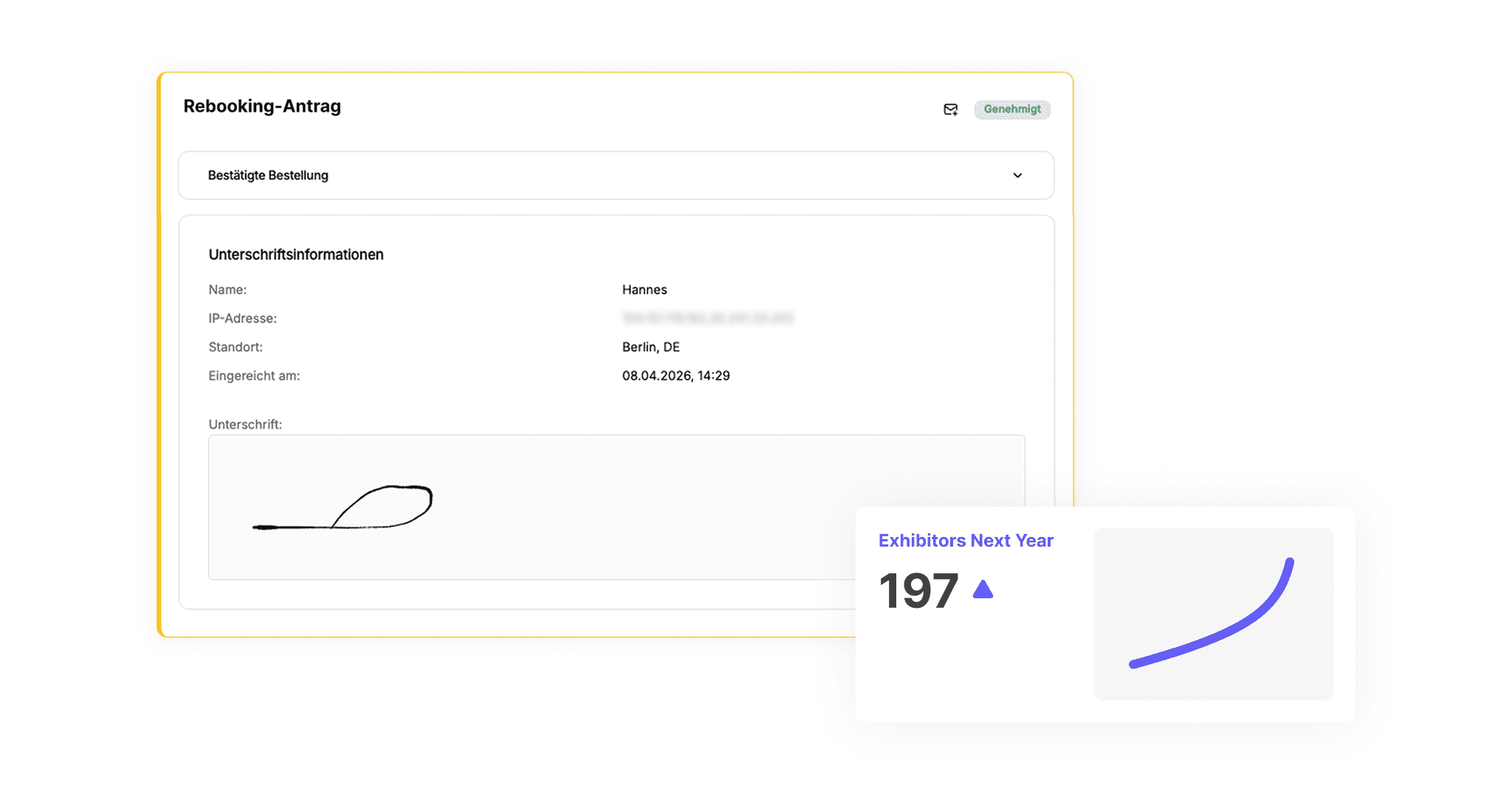
The core of trade fair planning is exhibitor booking. Instead of sending PDFs or manually transferring data into Excel, the entire booking process runs online – automated and transparent.
With Fairoo's digital registration form:
you define dynamic fields (e.g., booth sizes, extras)
you send automated email confirmations
you reduce errors through required fields and validations
🛠️ This creates a clean, traceable booking history – without media discontinuity.
Step 3: Centralize space management
Which exhibitor gets which booth? Where are there still gaps? Who has booked special areas?
A digital space management module allows you to:
manage booth spaces visually (e.g., as a hall plan)
assign spaces to individual exhibitors
make changes via drag-and-drop
keep occupancy up to date at all times
🔄 No more tedious manual updates – changes are immediately visible system-wide.
Step 4: Exhibitor portal & exhibitor communication
With a digital exhibitor portal, you simplify all communication. Exhibitors can:
manage their own data (logos, contacts, texts)
upload documents (e.g., proof of insurance)
receive automated messages (e.g., payment requests)
✅ For you, this means: fewer questions, fewer emails, fewer errors.
👥 In addition, you can send bulk emails with personalized content – e.g., about setup, directions, or deadlines.
Step 5: Website integration & system connectivity
Modern trade fair planning software doesn’t end with organization – it can also be seamlessly integrated into your ecosystem.
With Fairoo, you can:
automatically display exhibitor directories on your website (including logos, categories, filters)
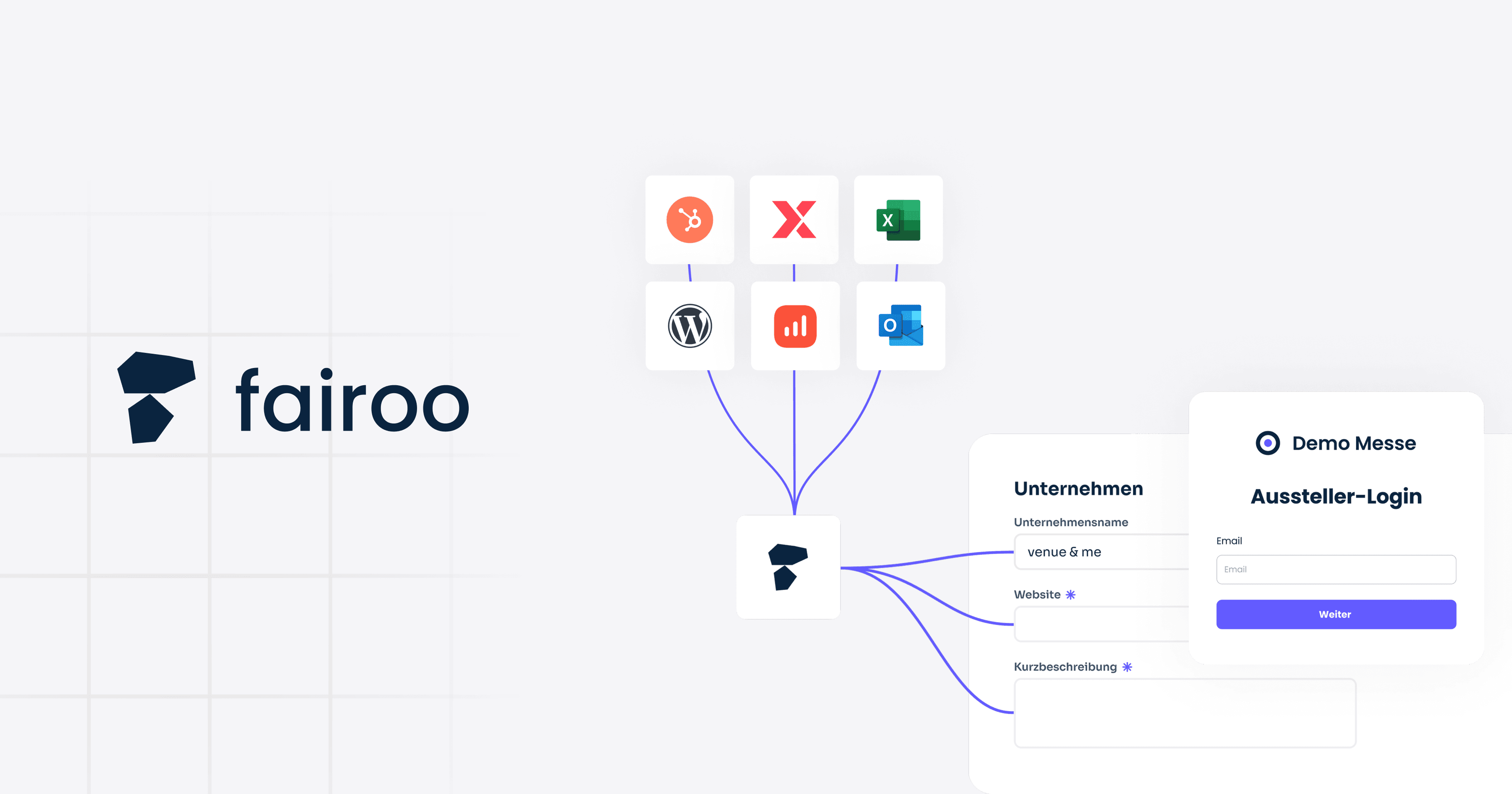
connect other systems, e.g., email marketing tools, payment providers, or newsletter systems via API
export data directly or create reports – ideal for teams, authorities, or sponsors
🔗 This ensures an end-to-end digital process from registration to publication.
Conclusion: Digital trade fair planning saves time, money, and nerves
Digital trade fair planning is no longer a luxury, but a must – for greater efficiency, better communication, and more satisfied exhibitors. Anyone still planning with Excel today is wasting potential.
With software like Fairoo, the transition succeeds in five clear steps – regardless of whether you organize career fairs, consumer fairs, or health fairs.